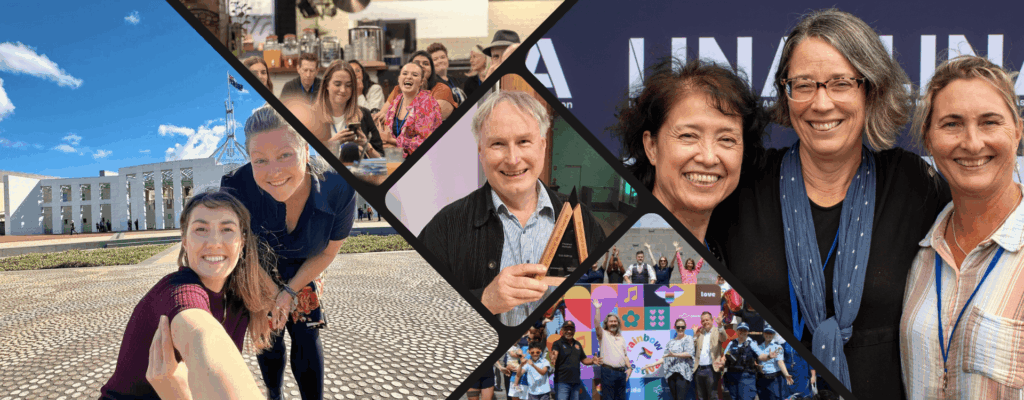
LINA’s goal is to support a vibrant and diverse news media landscape in Australia.
Key issue
Australia has one of the most concentrated media markets in the world. Traditional news media business models have collapsed as audiences have shifted to digital news consumption over decades.
There is a converging crisis between this, the growing threat of misinformation and disinformation and increasing emergencies requiring distribution of timely and accurate information to keep communities safe, and an under-resourced journalism sector.
Media Scholar Victor Pickard likens journalism’s value to that of a lighthouse: it provides an essential public service but there is no effective way to make people pay for it.
Our passion is to grow existing and encourage new independent media entrants.
This includes:
- 178 newsrooms
- Reaching 12,661,446 people a month
- Producing 2,921 public interest stories a week
These ‘green shoots’ of the news industry
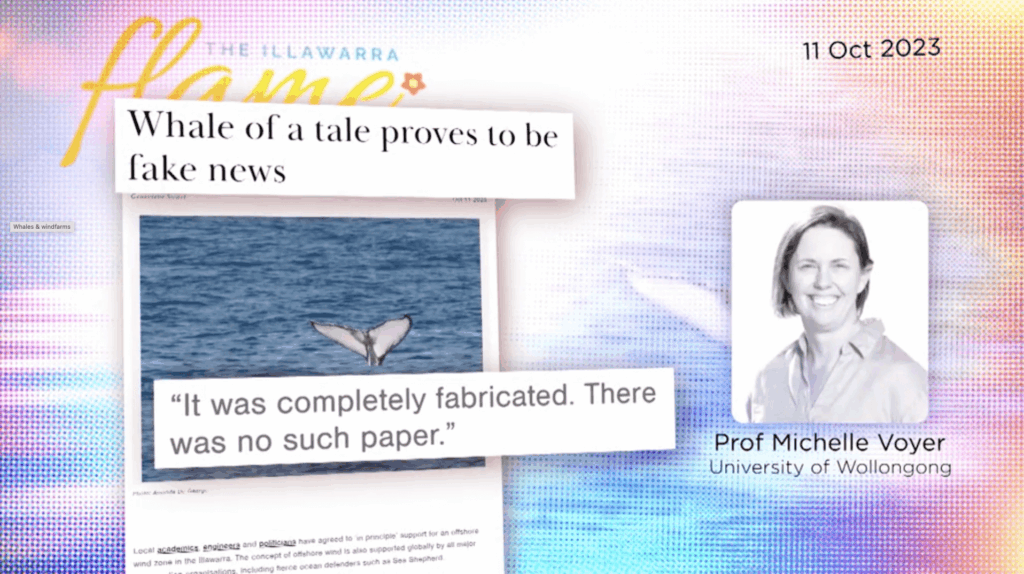
Illawarra Flame debunks fake wind-farm “study”
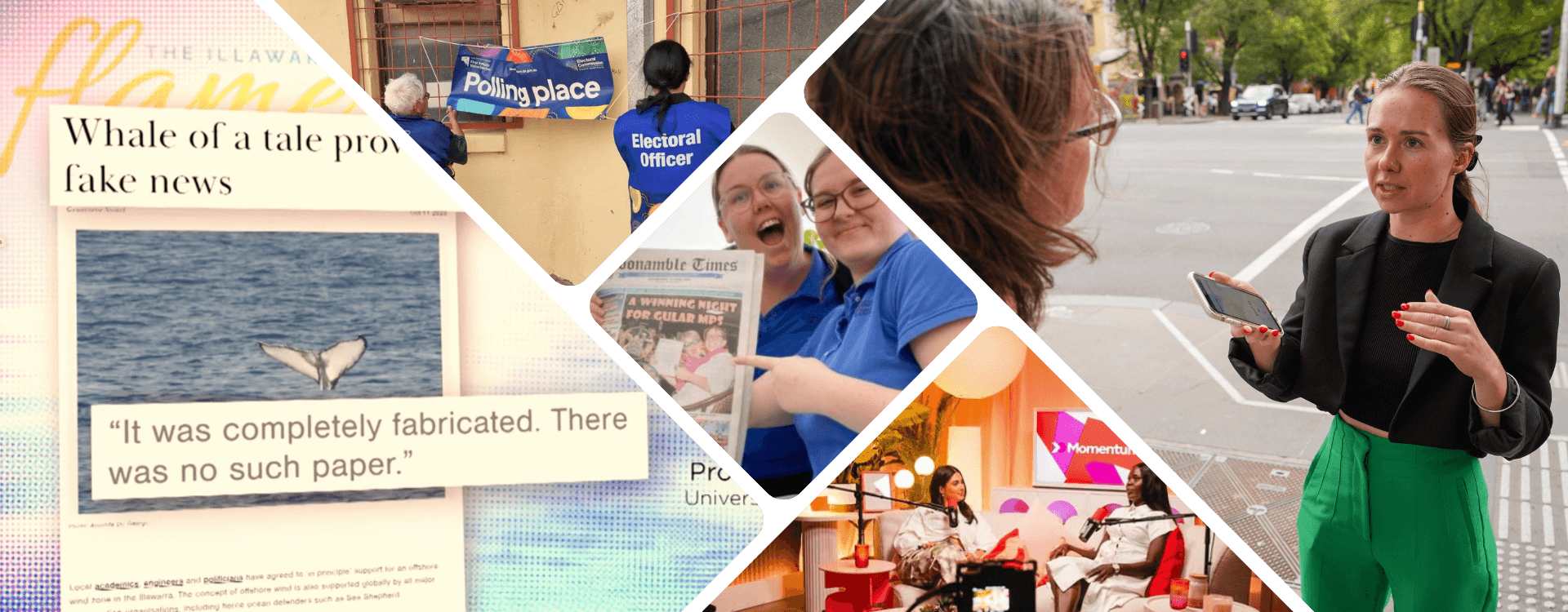
While heated discussion was underway last year about a proposal to build off-shore wind farms off the coast of Wollongong, opponents in the community, national media and parliament began circulating claims that wind turbines were dangerous to whales, supported by a supposed University of Tasmania study. Illawarra Flame investigated and found the research to be entirely fabricated, with no scientific evidence worldwide of wind farms harming whales, and were acknowledged for their commitment to fact-checking by Media Watch.
Manningham Life compiles council voting record for locals ahead of election
In preparation for their local election, Manningham Life analysed four years’ worth of petitions and issues raised at local council meetings, and collated councillors’ voting records into a reader-friendly table. A LINA micro-grant covered the print costs for this to be included in the publication’s free print distribution. This was the first time such information was analysed and collated to inform voters in the local Melbourne community.
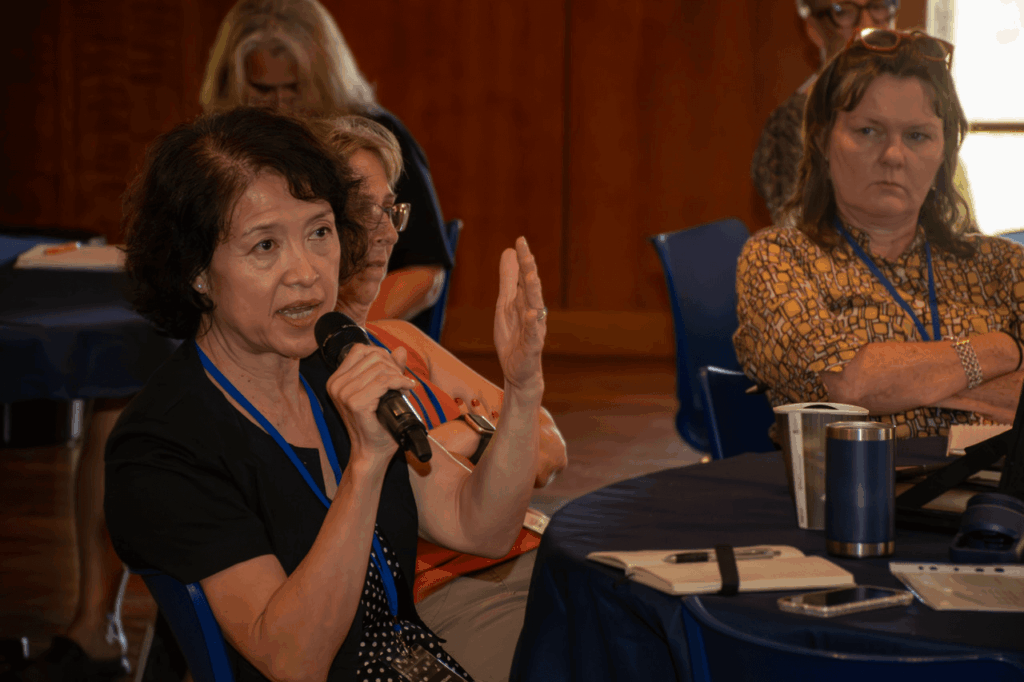
The Post exposes council’s extravagant taxpayer funded lunch
A Post exclusive revealed local councillors and council staff using taxpayer funds to book an extravagant lunch workshop estimated to have cost about $20,000. Facilitated by LINA’s strategic partnership with the ABC, The Post was able to receive a pre-publication review of this article from ABC’s legal team, providing feedback to mitigate for defamation risk. Following publication, the story was then picked up by 2GB, Sydney’s premier news and talk radio station, giving the issue wider coverage.
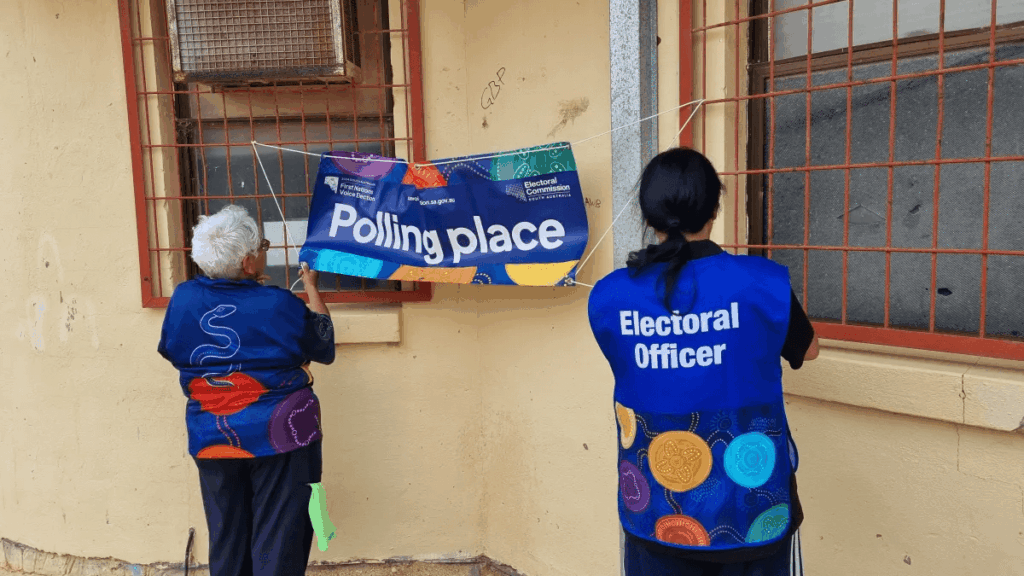
InDaily cover the South Australian First Nations Voice to Parliament election
A LINA micro-grant supported InDaily to undertake long-form reporting on South Australia’s state-based First Nations Voice to Parliament. InDaily’s Political Reporter travelled to remote communities in Port Lincoln, Ceduna and Yalata to observe elections and speak to Aboriginal people about their hopes and experiences, and potential impacts from the election process. The grant allowed this story to be covered in a more representative manner, centering Aboriginal voices that would otherwise not have been represented in the article.
Brunswick Voice draws community fundraising support for local arts space
A local community not-for-profit arts space had been on the brink of closure after discovering it needed to raise $10,000 for building compliance. They had raised just a quarter of that after weeks of campaigning but after a single article in the Brunswick Voice they raised the full amount within a few days and were well on their way to $20,000.

Newsport supports community through cyclone and aftermath
When Cyclone Jasper hit the Douglas Shire in December 2023, regional Queensland digital-only publication Newsport provided live blog updates, with hour-by-hour emergency updates, coverage of road conditions and essential information about emergency services. Newsport received 158,000 unique visitors to their site during the week, a five times traffic increase. The team of four journalists and two regular columnists continued to report on clean-up actions, repairs and available support to help the community rebuild following the disaster, long after state-wide media organisations had discontinued their cyclone coverage.

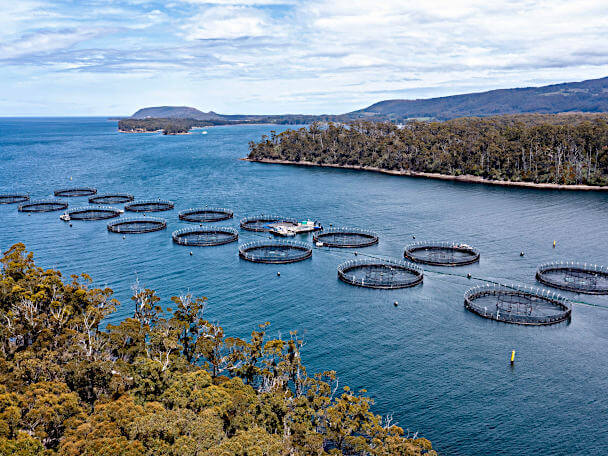
Tasmanian Inquirer investigation reveals salmon farms are killing seabirds
An investigation by the Tasmanian Inquirer revealed that dozens of seabirds had been killed by a salmon company, with approval from the Tasmanian government, following their entanglement in substandard netting. The story, which was supported by a LINA microgrant (LINK) was then picked up by other publications and later raised by an MP in the Tasmanian State Parliament.
A 2024 Monash University study found that people who believed “climate change conspiracy” got most of their information about news and current events from commercial and social media, as opposed to independent news sources.
The Westsider’s 2024 local election coverage
A LINA microgrant supported the creation of a 12-page local election special profiling candidates for local government elections in Melbourne’s western suburbs. This project filled a critical information gap in the region and reinforced community trust in local journalism. It also supported the development of future journalists through a partnership with the RMIT Journalism Program, where first-year students conducted interviews and wrote profiles as part of their coursework, gaining valuable hands-on experience. In 2023-24 30% of LINA newsrooms grew their teams by hiring more staff.

“Information is as vital to the healthy functioning of communities as clean air, safe streets, good schools and public health.”
Knight Commission on the Information Needs of Communities in a Democracy, 2009
What does an average LINA newsroom look like?
Stories published per month
Mastheads/newsrooms
Annual revenue
Monthly website visitors
Full-time-equivalent employees
Volunteer contributors
How LINA helps
LINA’s job is to help newsrooms increase the diversity, quality and relevance of news services in communities across Australia. We provide hands-on, capacity-building support to digital and hybrid publishers in a range of areas including business operations, technology, legal and policy, audience engagement and journalism.
- Over 8 hours of training delivered
- $40,570 worth of services offered to each newsroom annually (estimated).
- $45,977 distributed via public interest journalism grants since January 2024.
- Over $520,000 raised for newsrooms through the annual ‘Our News. Your Voice’ campaign
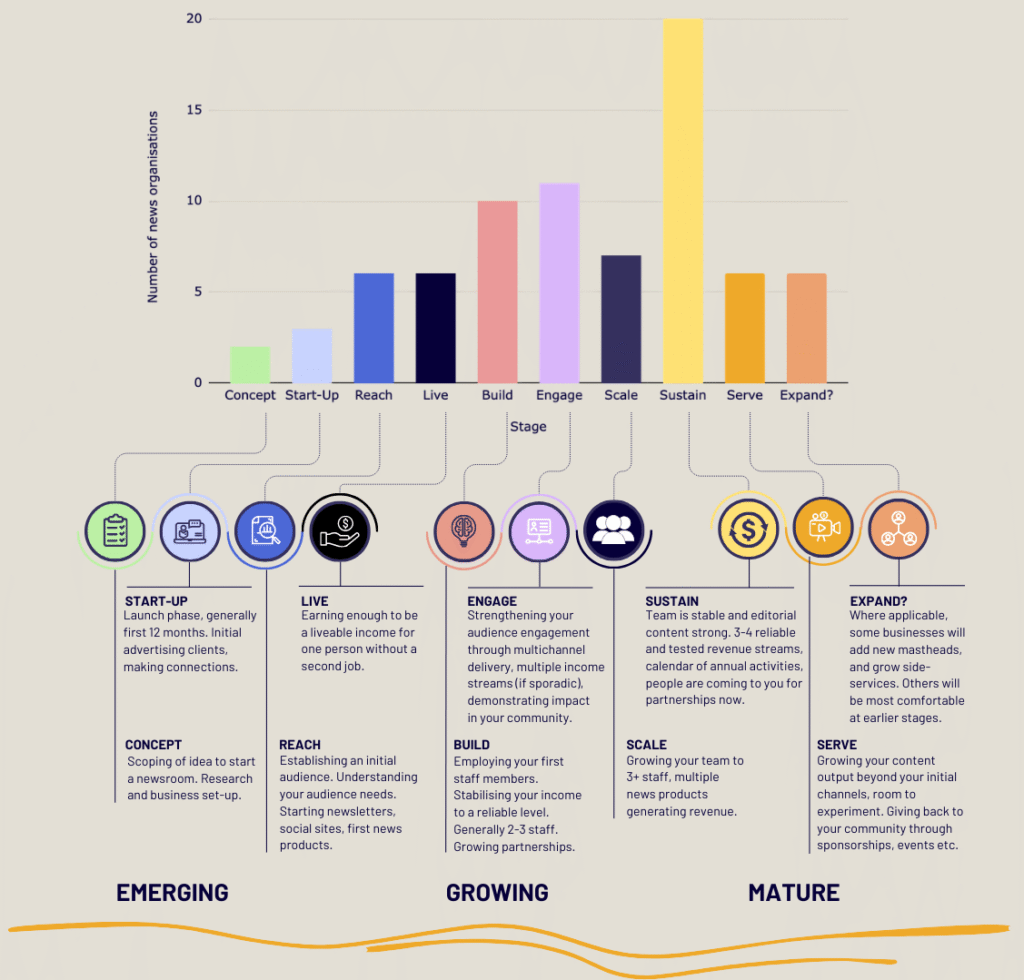
With this support LINA members can move their newsroom all the way from concept to a mature and sustainable organisation…
So, is it working…?
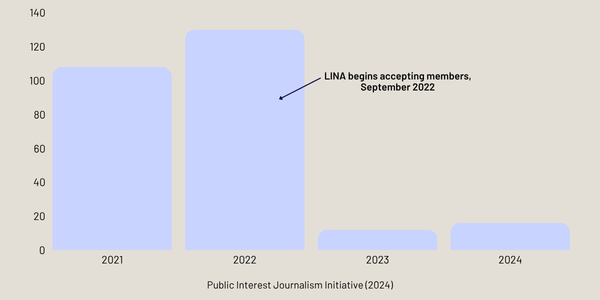
Since LINA’s launch there has been an acceleration in newsroom openings in Australia. Thirty-seven percent of LINA members formed since 2020, with the median age of member newsrooms being nine years.
The Public Interest Journalism Initiative (PIJI) recorded the net contraction of newsroom closures also slowed significantly over the past two years, post LINA’s emergence.
The following changes were recorded in the sustainability of LINA member publishers studied across three financial years:
- Median annual revenue increased by 18% in 2025.
- The median full-time equivalent staffing increased steadily from 1.2 in 2023, to 1.7 in 2024 and 2.0 in 2025.
- 38% created a new income stream in 2025.
- 44% launched a new service in 2025 (e.g. added a new masthead, distribution channel etc).
- Median number of monthly unique website visitors more than doubled over two years between 2023 and 2025, from 14,000 to 30,000.
- Reader contributions rose from 8% in 2023 to 45% in 2024, potentially attributable to LINA’s Our News, Your Voice campaign/upskilling program.
Net newsroom contractions (closures) in Australia:

LINA has done an exceptional job to service and represent its members. LINA has also provided so many opportunities to learn, not just about the publishing business but also for personal growth.
Stella Yee,
Editor & Publisher

I continue to say that LINA saved my business. It opened me up to a whole lot more opportunity I didn’t really know existed.
Liam Fitzgerald,
Publisher & Founder

This financial year is pivotal for me. I am about to leave my day job and do this full time. Thanks to LINA I feel like I have support to keep going.
The Point
Publisher & Editor

LINA is doing an amazing job supporting local and independent news publishers like myself. For years, I felt in the wilderness as I struggled to put out local news and keep abreast of all the issues that impact local news publishers. Thank you, LINA.
Jacky Barker,
Founder

There is no doubt that LINA is helping to sustain a diverse news media ecosystem. The work of LINA and its members is vital to the communities you serve and what brings us together.
The Hon Michelle Rowland MP,
Minister for Communications (2022-2025)

I just want to say how awesome it was to have ABC Legal review that podcast for us. What an awesome resource to be available to LINA members. Really appreciate it!
Troy Dodds,
Managing Editor

LINA has connected Tasmanian Inquirer to a broader network of digital media startups, allowing us to learn from others experience, represent the emerging sector to government, share tips of our own and gain from shared programs and support we would otherwise not have time to develop on our own. LINA’s work is invaluable.
Bob Burton,
Tasmanian Inquirer

Working as a journalist in a small news company often means lacking thorough feedback opportunities. LINA’s sub-editing service came as a perfect solution for me. The feedback provided has been incredibly valuable and insightful. This service is sure to enhance my writing skills and contribute to my growth as a journalist.
Jamie Jansen,
Newsport

I feel supported by the LINA team who are there ready to answer my questions/offer advice/support if required. The expertise that we have been able to call on has been beneficial.
Lechelle Earl,
The SE Voice

As we initially focused on print, learning from other publishers who operate solely in the digital realm has been invaluable. Seeing how they generate revenue has allowed us to adopt similar strategies, especially in the digital space. As a result, we’ve been able to create new revenue streams for Echo News.
Katie Maclean,
Echo News

I genuinely don’t believe I would still be operating without LINA’s support. LINA has provided invaluable guidance, training, advocacy and practical support that has helped us navigate an increasingly challenging media landscape.
Susie Williams
Editor & Founder

I’m never sure that what we’re doing is good, and when I’m starting to think I should just give up then LINA kinda picks me up and throws me back into the ring for another round. I would have quit long ago if not for LINA’s support.
Raphaella Crosby,
The New England Times

Being a LINA member has made the impossible seem a bit more possible. We publishers are all in our little silos, doing our thing; LINA helps us to appreciate that, although being an entrepreneur can be a lonely job, we’re all working side by side towards the same sort of goals.
Peri Strathearn,
Murray Bridge News

[LINA’s legal service] has backed us to be bolder in our reporting, knowing where we stand from a legal point of view. This is a great service which we would otherwise find it difficult to afford by ourselves.
Publisher
The Village Voice

Harry Taruva
The strategic direction we get from LINA is immense. The resources we get always keep us on our toes and remind us to keep improving.
Founder
How you can help
Support your local and independent news publications! If you have the means to purchase a paid subscription or donate to a newsroom, your money will go a long way to producing public interest journalism. But if not, your engagement still goes a long way. So read, watch, subscribe and share away…
Consider advertising with your local digital newsroom. They will be able to provide you with stats about the reach of their stories. Generally, audiences of local news publications are highly engaged and targeted, so advertising can be extremely effective.
LINA is seeking policy amendments to support newsroom sustainability:
- Government advertising commitments for locally produced media, legislated for continuity.
- Local Government Acts updated to include digital public interest news publishers.
- Access to DGR status for public interest journalism.
- Eligibility for all support programs relevant to news media.
- Support for the industry-led activities outlines in LINA’s Pre-Budget Submission 2025-2026.
Funders want to help build an informed and engaged society, and journalism is increasingly recognised as an important contributor to that role. LINA is seeking partners in a range of activities, reach out to get the conversation started!